Speaking Evangelicalese

Instructions are now available for the politically-minded.

Back to community

For more than a generation Americans have believed that "spatial mobility" would increase, and, as it did, feed an inexorable trend toward rootlessness and anomie. This vision of social disintegration was perhaps best epitomized in Vance Packard's 1972 bestseller A Nation of Strangers, with its vision of America becoming "a society coming apart at the seams." In 2000, Harvard's Robert Putnam made a similar point, albeit less hyperbolically, in Bowling Alone, in which he wrote about the "civic malaise" he saw gripping the country. In Putnam's view, society was being undermined, largely due to suburbanization and what he called "the growth of mobility."

Yet in reality Americans actually are becoming less nomadic. As recently as the 1970s as many as one in five people moved annually; by 2006, long before the current recession took hold, that number was 14 percent, the lowest rate since the census starting following movement in 1940. Since then tougher times have accelerated these trends, in large part because opportunities to sell houses and find new employment have dried up. In 2008, the total number of people changing residences was less than those who did so in 1962, when the country had 120 million fewer people. The stay-at-home trend appears particularly strong among aging boomers, who are largely eschewing Sunbelt retirement condos to stay tethered to their suburban homes—close to family, friends, clubs, churches, and familiar surroundings.

- Excerpted from Joel Kotin, There’s No Place Like Home, Americans are Returning to Localism
The religion of tolerance

Here's what Beverley McLachlin, the Chief Justice of Canada, had to say at the World Conference on Religion and Education in 2004:

In a diverse, multicultural world, tolerance is the most important value. Whatever else we teach our children, we must teach them tolerance ... The rearing of children is ... the most profound responsibility that lies on any society. But whatever our history, whatever our belief, we should always remember that this is a responsibility, not a right. Too often in the past, the welfare of children has been sacrificed to other interests; too easily it has been relinquished in favour of more compelling competing values. Too often religion has been used not to make our children strong and free but rather to suppress and stifle; not to make them tolerant, but rather to teach them hate; not to incline them to peace, but rather to strife. Religion is a fundamental element of our humanity. As such, it properly occupies a central place in the rearing of our children ... [But we] must teach them not only religion but above all, tolerance, for surely that is what is in their best interests.

(quoted on p. 94 of Nation of Bastards: Essays on the End of Marriage)

While I'm a fan of the classical definition of tolerance, summarized, for example, in Voltaire's well-known statement "I disapprove of what you say, but I will defend to the death your right to say it", I somehow doubt that that's how she'd define the term.

Who titled this book?

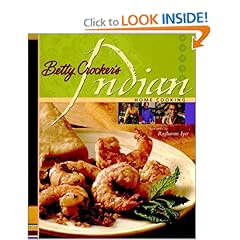
While trying to figure out how to cook, I've also been trying to lend a more international flavour to my palate. That's meant that I've got volumes lying on my bookshelves with titles such as:

Of books in that class, I've got one with a particularly unappealing title:

Strangely enough it's actually quite a good book. The reviews checked out but I was still quite skeptical getting the thing. (Of course, I paid maybe $5 for the thing so it wasn't much of a risk).

I have to admit that a lot of these books are rather over-ambitious as they attempt to cover large geographical regions in which there are likely to be significant variations.

On the other hand, sometimes I wonder if there's a wormhole connecting up Morocco directly to the Indian subcontinent as a number of the dishes are quite similar. (Of course the term "Middle Eastern" in the one book I mentioned earlier could probably be fairly accurately replaced with "Islamic", as it covers roughly all regions in which Islam currently dominates. Looking to make some homemade falafel, it took a while before I realized that Israeli falafel - which I've eaten more of is based on garbanzo beans (chick peas) versus the fava-bean falafel in, e.g., Egypt)

Pages

Subscribe to Rotundus.com RSS